The Silent Power of APIs: How They Shape the Modern Web
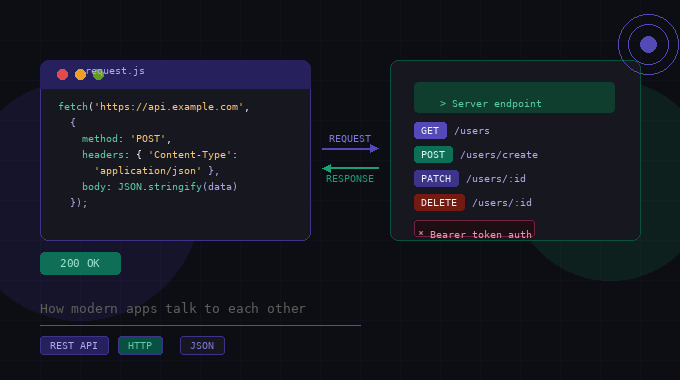
When people think about the internet, they usually picture beautiful websites, sleek mobile apps, and seamless user experiences. But behind the scenes, there’s a quiet force making all of this possible: APIs.
What Is an API, Really?
An API (Application Programming Interface) is essentially a bridge that allows different software systems to communicate with each other. Instead of building everything from scratch, developers can “plug into” existing services and exchange data in real time.
Think of it like ordering food at a restaurant. You don’t go into the kitchen—you simply tell the waiter (the API) what you want, and they bring it back to you.
Why APIs Matter More Than Ever
Their importance has grown significantly in recent years. Every time you log in with a social account, check a map, or complete an online payment, APIs are quietly doing the heavy lifting. They’ve become essential because they allow developers to:
- Build faster by reusing existing services
- Connect multiple platforms seamlessly
- Focus on core features instead of infrastructure
This shift has led to the rise of API-first development. Instead of treating APIs as an afterthought, teams now design them at the very beginning. This approach results in more scalable systems and smoother collaboration between frontend and backend developers.
REST vs GraphQL: The Ongoing Debate
When it comes to how APIs are designed, two approaches dominate the conversation. REST remains popular due to its simplicity and familiarity, while GraphQL offers more flexibility by letting clients request only the data they need. The choice between them often depends on the complexity of the application and performance requirements.
Security: The Hidden Challenge
Of course, with this growing reliance comes responsibility. APIs can become entry points for security risks if not properly handled. That’s why developers must pay attention to key aspects such as:
- Authentication and authorization
- Input validation
- Rate limiting and monitoring
Ignoring these elements can turn even a well-built system into a vulnerable one.
In the end, APIs are the backbone of modern software. They enable systems to talk to each other, power integrations, and accelerate innovation. While users may never see them, their impact is everywhere—and for developers, mastering APIs is no longer optional, it’s fundamental.